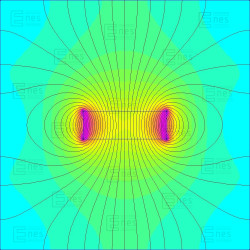
remanence Br |
~ 1,158 [T] |
coercivity HcB |
~ 842 [kA/m] |
coercivity HcJ |
~ 935 [kA/m] |
We can offer magnet parameters according to individual specifications, including for remanence induction Br, coercivity HcB, coercivity HcJ, magnetic moment, operating point Jd, magnetisation direction and its deviation, etc. In your e-mail correspondence, please indicate the required minimum parameter values or magnetic parameter values within the specified minimum-maximum range.
Density |
~7,5 [g/cm3] |
Vickers’ hardness (HV) |
~600 [kg/mm2] |
Resistivity |
~144 [uOhm x cm] |
If you require neodymium magnets manufactured to strict specifications, please send us your enquiry along with your requirements.
.jpg)
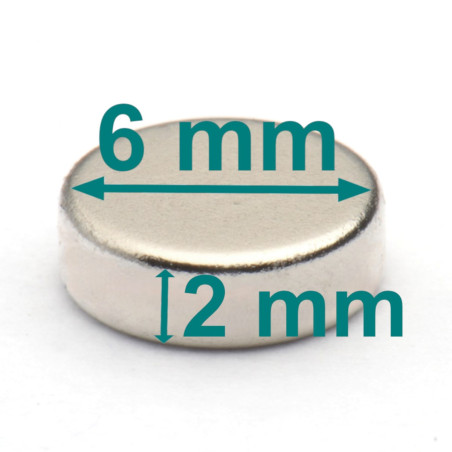
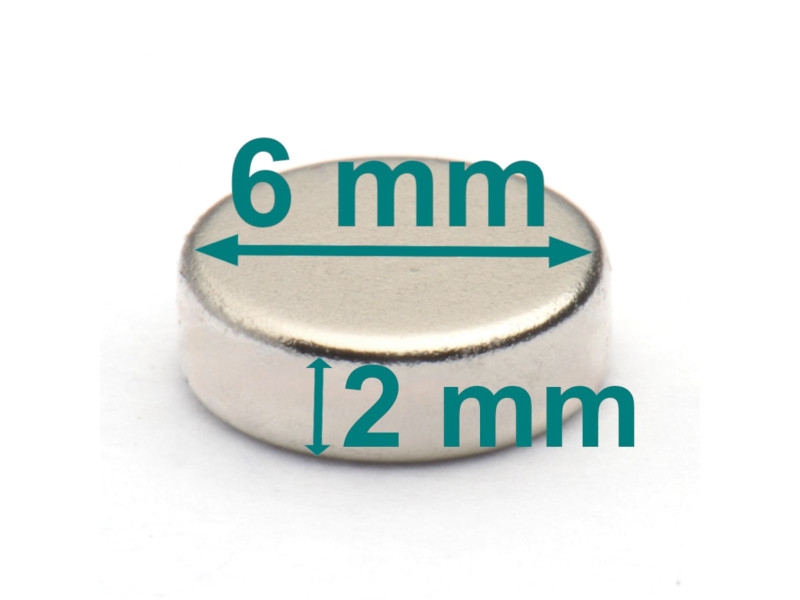
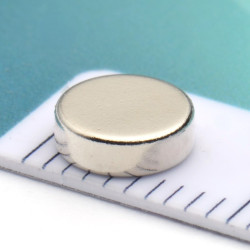
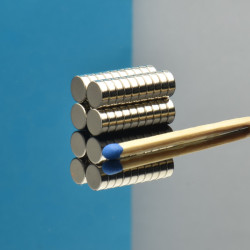
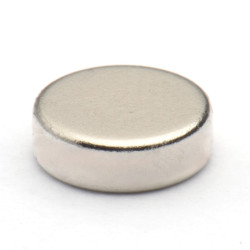
This tiny disc magnet is a neodymium magnet. Every neodymium magnet is a rare earth magnet.
Rare earth magnets contain at least some of the metals known as rare earth elements. These elements include scandium, yttrium, lanthanum, cerium, praseodymium, neodymium, promethium, samarium, europium, gadolinium, terbium, dysprosium, holmium, erbium, thulium, ytterbium and lutetium. The most well-known of these elements for any magnetism enthusiast is, of course, neodymium, as is samarium, which is used to produce SmCo magnets. It is generally believed that rare earth metals occur in small quantities in the earth's crust. In fact, there are quite a lot of them, but because their deposits are generally scattered and rare, and therefore not suitable for profitable industrial mining, they have been labelled ‘rare earth elements’.