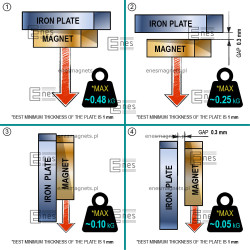
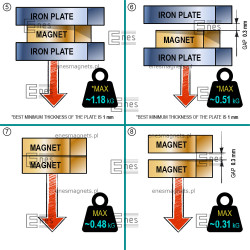
remanens Br |
~ 1,158 [T] |
Koercivitet HcB |
~ 842 [kA/m] |
Koercivitet HcJ |
~ 935 [kA/m] |
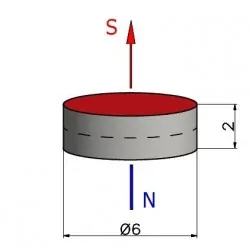
Vi kan tilby magnetparametere i henhold til individuelle spesifikasjoner, inkludert for remanensinduksjon Br, koercivitet HcB, koercivitet HcJ, magnetisk moment, driftspunkt Jd, magnetiseringsretning og dens avvik, etc. I e-postkorrespondansen din, vennligst oppgi de nødvendige minimumsparameterverdiene eller magnetiske parameterverdiene innenfor det angitte minimum-maksimumområdet.
Tetthet |
~7,5 [g/cm3] |
Vickers' hardhet (HV) |
~600 [kg/mm2] |
Resistivitet |
~144 [uOhm x cm] |
Hvis du trenger neodymmagneter som er produsert i henhold til strenge spesifikasjoner, kan du sende oss en forespørsel sammen med dine krav.
.jpg)
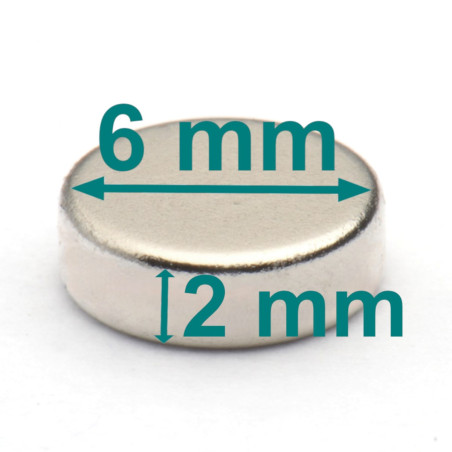
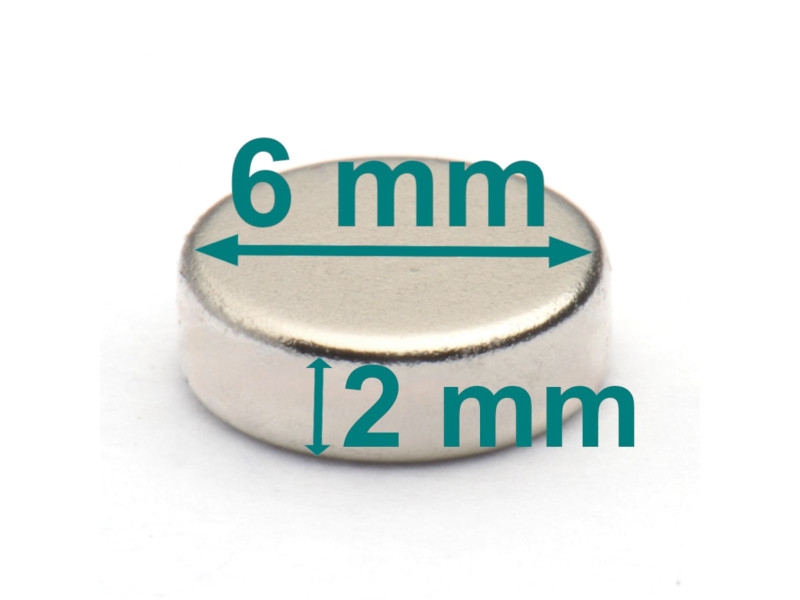
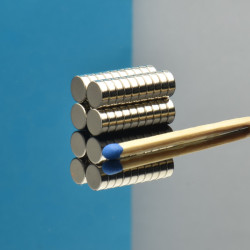
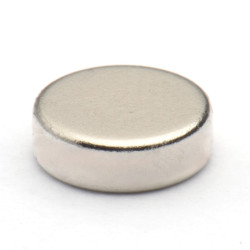
This tiny disc magnet is a neodymium magnet. Every neodymium magnet is a rare earth magnet.
Rare earth magnets contain at least some of the metals known as rare earth elements. These elements include scandium, yttrium, lanthanum, cerium, praseodymium, neodymium, promethium, samarium, europium, gadolinium, terbium, dysprosium, holmium, erbium, thulium, ytterbium and lutetium. The most well-known of these elements for any magnetism enthusiast is, of course, neodymium, as is samarium, which is used to produce SmCo magnets. It is generally believed that rare earth metals occur in small quantities in the earth's crust. In fact, there are quite a lot of them, but because their deposits are generally scattered and rare, and therefore not suitable for profitable industrial mining, they have been labelled ‘rare earth elements’.