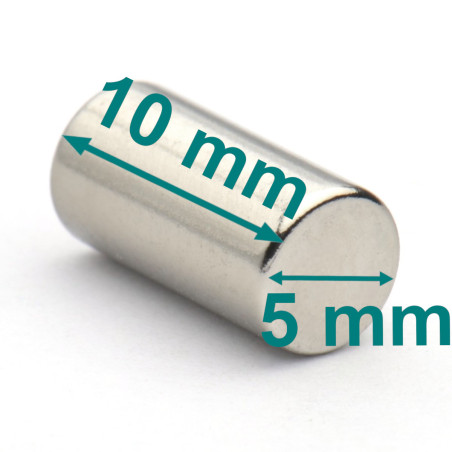
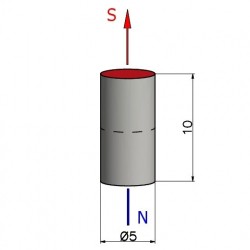
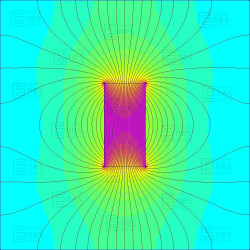
Direction of magnetization along the height means that one circular surface of a magnet makes the N-pole, while the other – opposite – circular surface refers to the S-pole.
Grade
N38
Magnet type
Neodymium
Maximal hoisting capacity
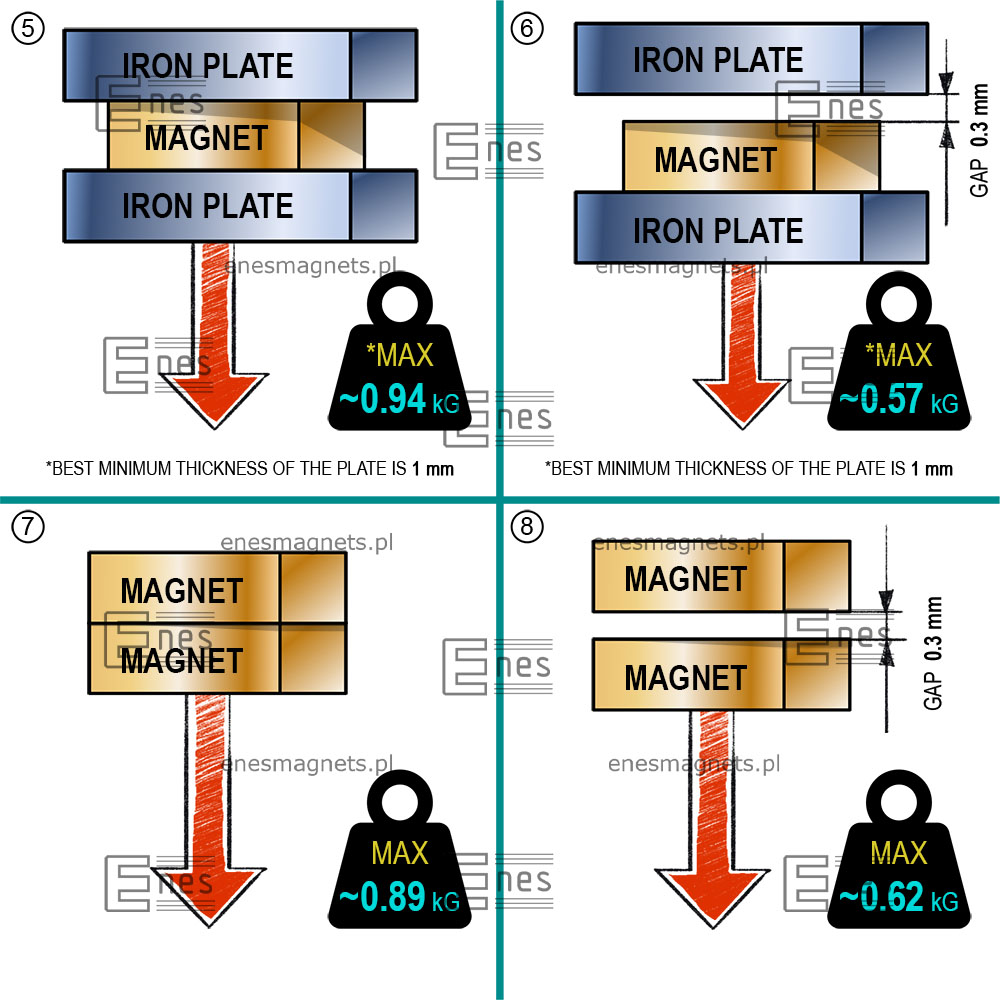
~0,89 [kg]
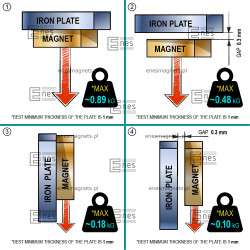
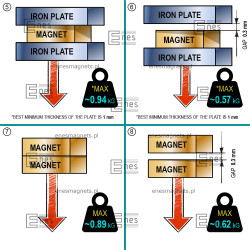
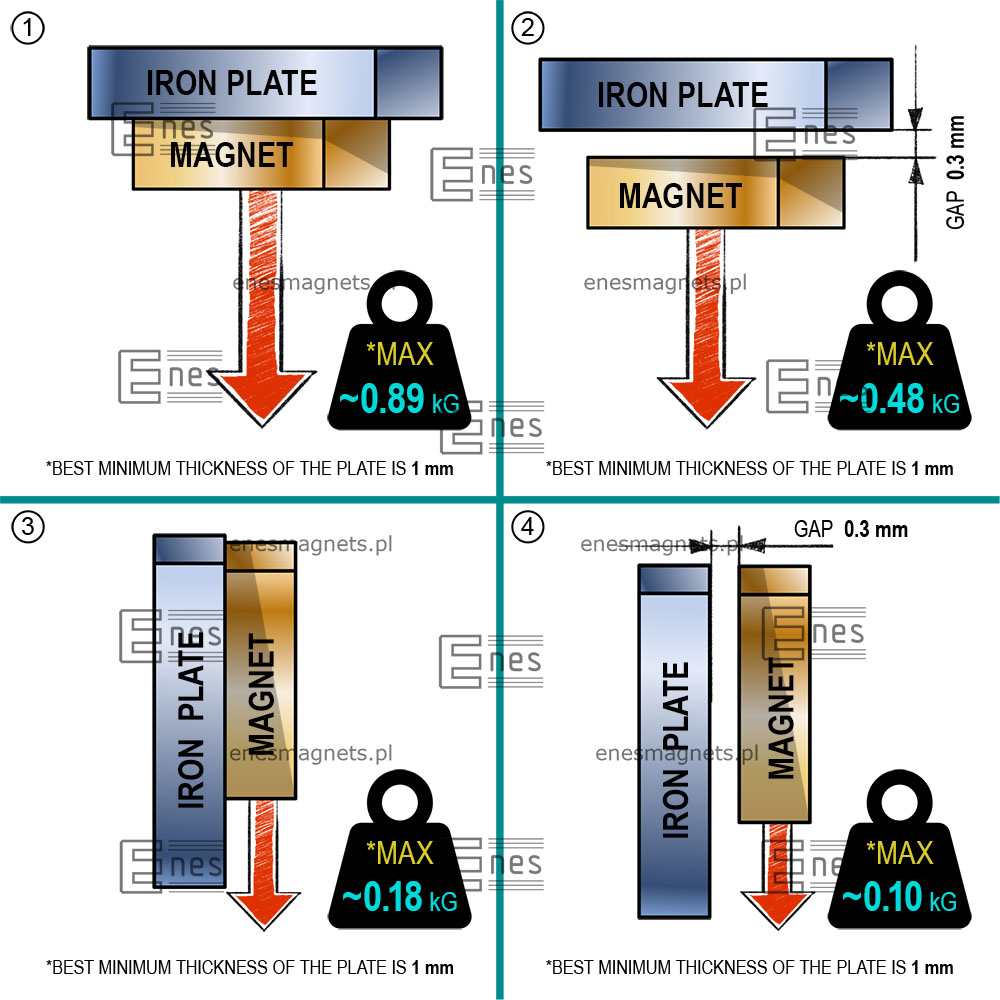
The maximum lifting capacity specified above was measured using smooth, polished sheet metal. The sheet metal used was of optimal thickness. The pull-off force acted perpendicularly. With a force acting parallel to the sheet metal, i.e. when moving the magnet across the sheet metal, the lifting capacity of the magnet will be significantly lower. The gap between the magnet and the sheet metal resulting from the sheet metal being covered with a layer of paint or galvanic coating will also cause a decrease in the lifting capacity of the magnet. Any roughness or unevenness of the sheet metal will also reduce the lifting capacity of the magnet. The highest lifting capacity is achieved by using a sufficiently thick sheet containing a high amount of iron. Using high-carbon steel or cast iron sheet will result in a lower lifting capacity. The maximum lifting capacity is also affected by the operating temperature of the magnet. A heated magnet will have a lower lifting capacity.
Coating
Nickel-plated (NiCuNi)
Do not use in water
Sintered neodymium magnets are brittle (fragile). A neodymium magnet without housing could break after an impact with another strong magnet.
Maximum working temperature
≤ 80
[°C]
The specific maximum operating temperature of a magnet depends on the magnetic circuit in which it is placed, so we strongly recommend testing the magnet yourself under specific conditions. A heated magnet will have less adhesive force. Temperature coefficient of remanence TK(Br): ≤ -0.12%/°C. Temperature coefficient of coercivity TK(HcJ): ≤ -0.6%/°C.
Weight
1,47 [g]
The magnet parameter values presented here are the result of measurements taken on one specific magnet and are used to compare magnets available in the online shop. We recommend testing the magnet yourself under the expected operating conditions.
Magnetic properties of material grade N38
remanence Br
~ 1,197 [T]
coercivity HcB
~ 842 [kA/m]
coercivity HcJ
~ 935 [kA/m]
We can offer magnet parameters according to individual specifications, including for remanence induction Br, coercivity HcB, coercivity HcJ, magnetic moment, operating point Jd, magnetisation direction and its deviation, etc. In your e-mail correspondence, please indicate the required minimum parameter values or magnetic parameter values within the specified minimum-maximum range.
Physical properties
Density
~7,5 [g/cm3]
Vickers’ hardness (HV)
~600 [kg/mm2]
Resistivity
~144 [uOhm x cm]
If you require neodymium magnets manufactured to strict specifications, please send us your enquiry along with your requirements.
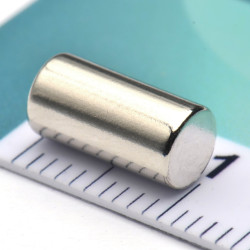
D5x10/N38 - Neodymium rod magnet
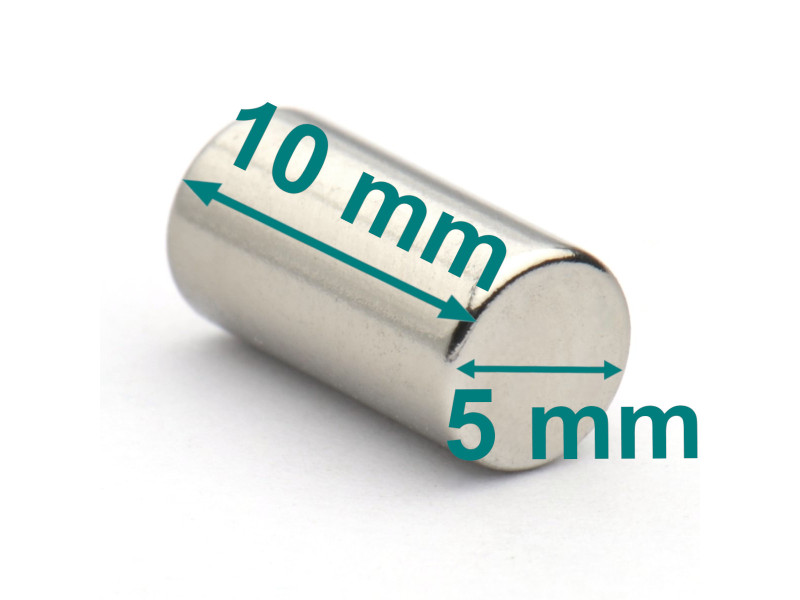
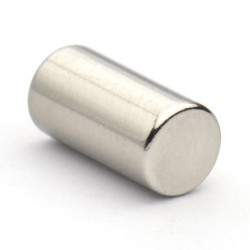
A neodymium magnet strongly attracts iron and all its alloys, as well as gadolinium, nickel, erbium, cobalt and dysprosium. Whether a metal object is attracted more or less strongly also depends on its shape. In a long object, such as an iron nail, when it is saturated with a magnetic field, the positions of the magnetic poles quickly stabilise. The ‘N’ pole is at one end of the nail and the ‘S’ pole at the other. If we melt this nail at a high temperature and form the resulting material into a sphere, it will be more difficult to attract this sphere with a magnetic field, especially if the sphere is in motion. In this high magnet with a diameter of 5 mm and a height of 10 mm, the N pole is located on the circular base of the cylinder and the S pole on the opposite, also circular surface.

.jpg)