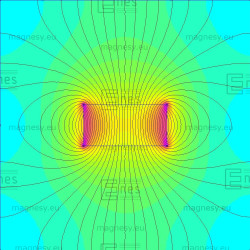
remanence Br |
~ 1,197 [T] |
coercivity HcB |
~ 842 [kA/m] |
coercivity HcJ |
~ 935 [kA/m] |
We can offer magnet parameters according to individual specifications, including for remanence induction Br, coercivity HcB, coercivity HcJ, magnetic moment, operating point Jd, magnetisation direction and its deviation, etc. In your e-mail correspondence, please indicate the required minimum parameter values or magnetic parameter values within the specified minimum-maximum range.
Density |
~7,5 [g/cm3] |
Vickers’ hardness (HV) |
~600 [kg/mm2] |
Resistivity |
~144 [uOhm x cm] |
If you require neodymium magnets manufactured to strict specifications, please send us your enquiry along with your requirements.
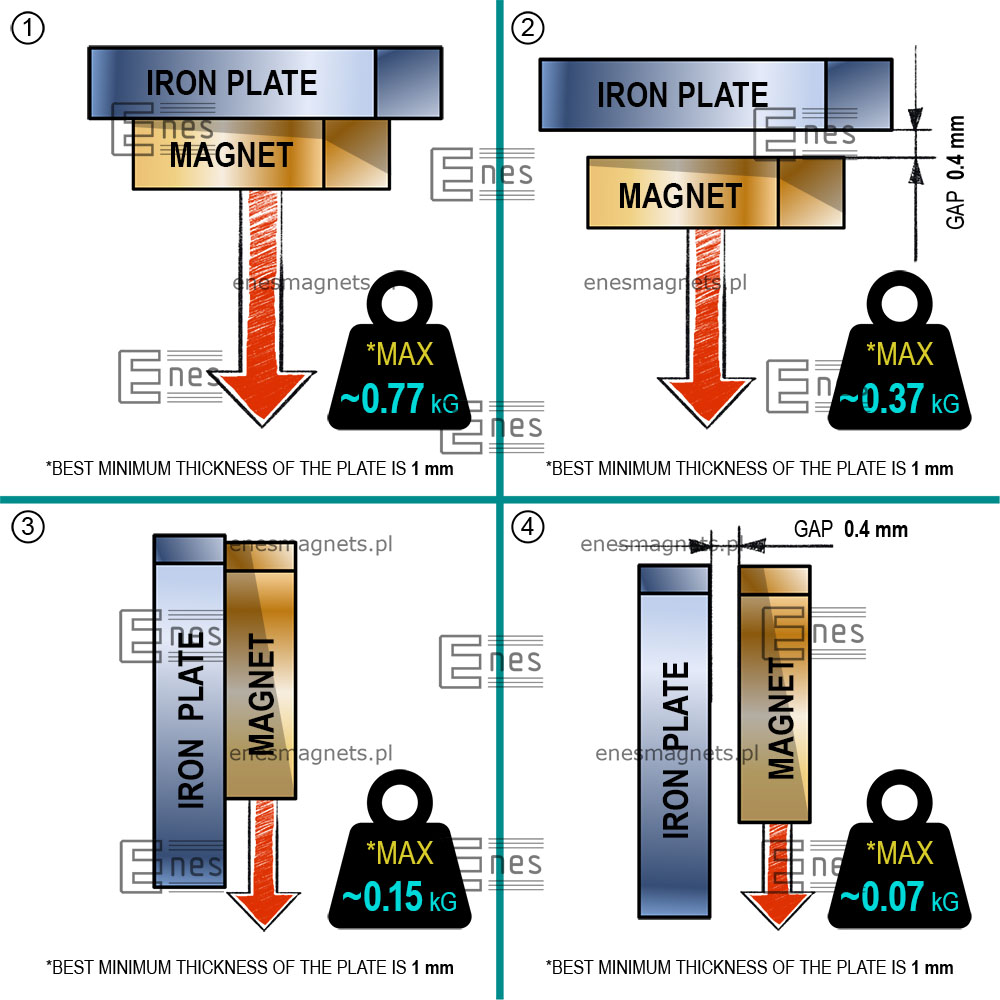
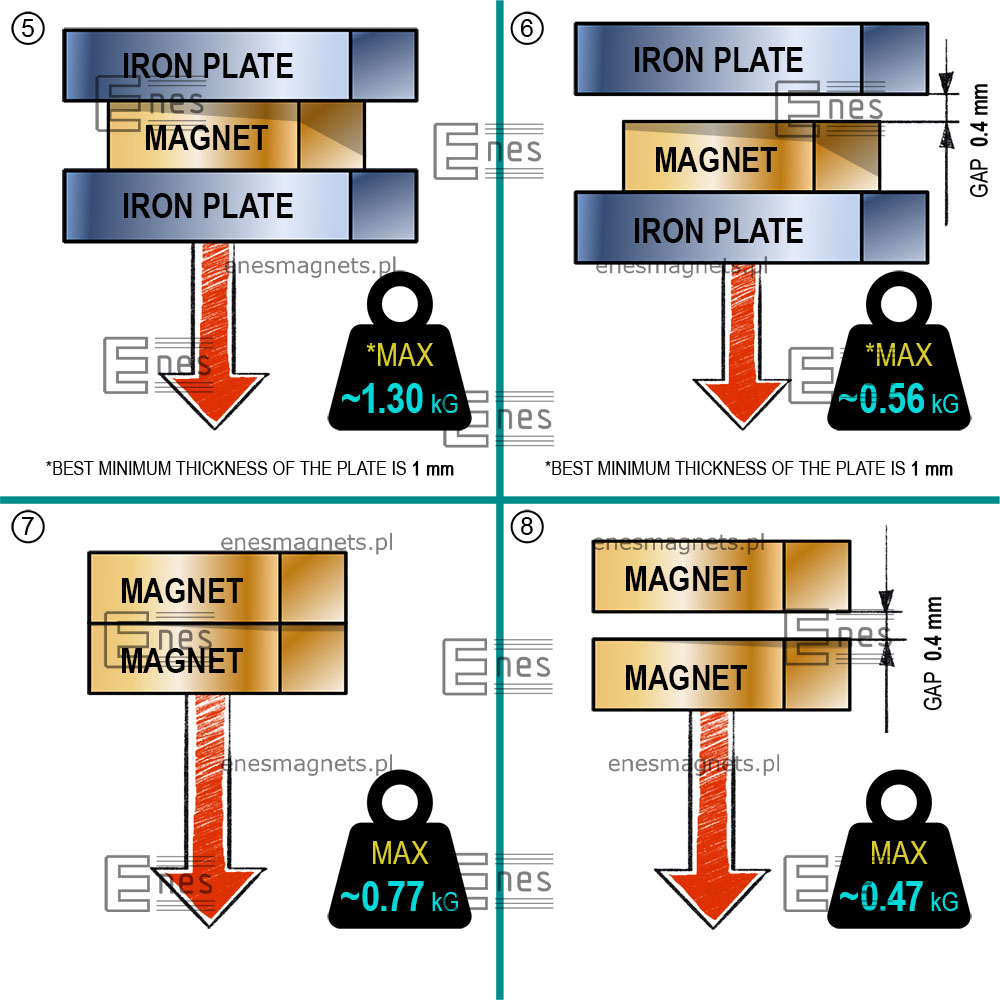
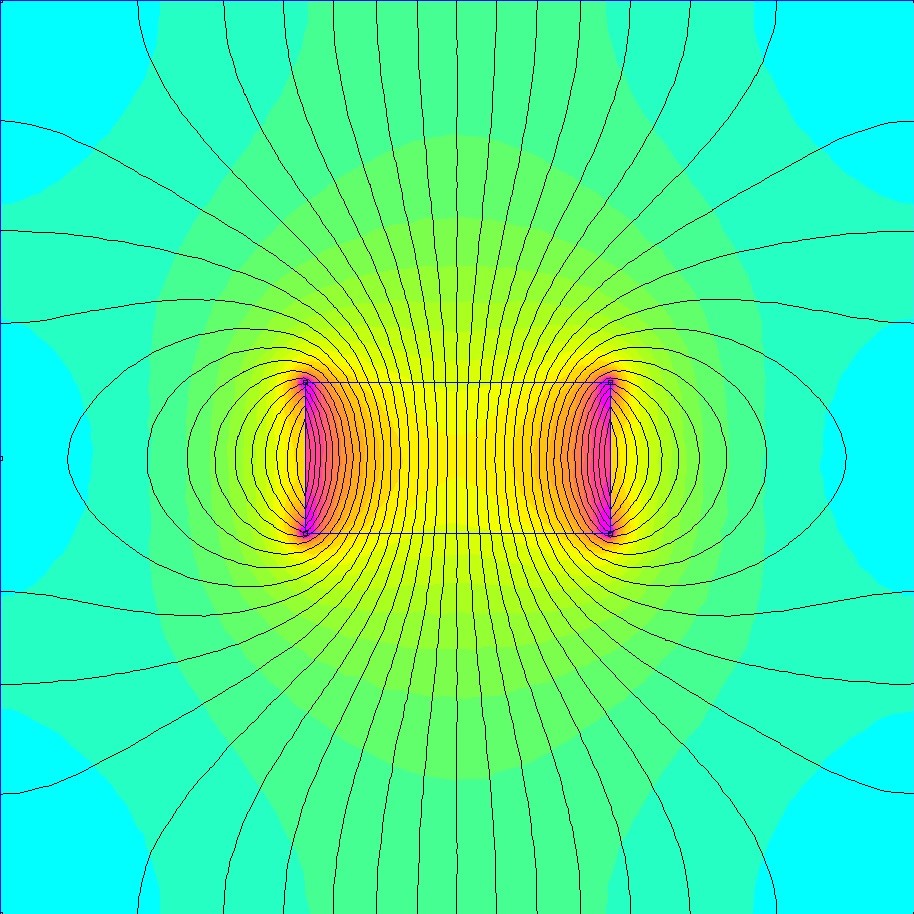
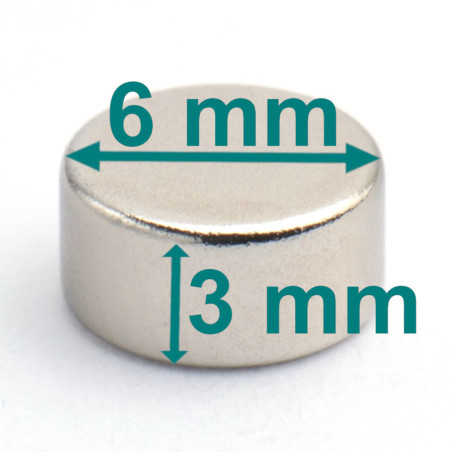
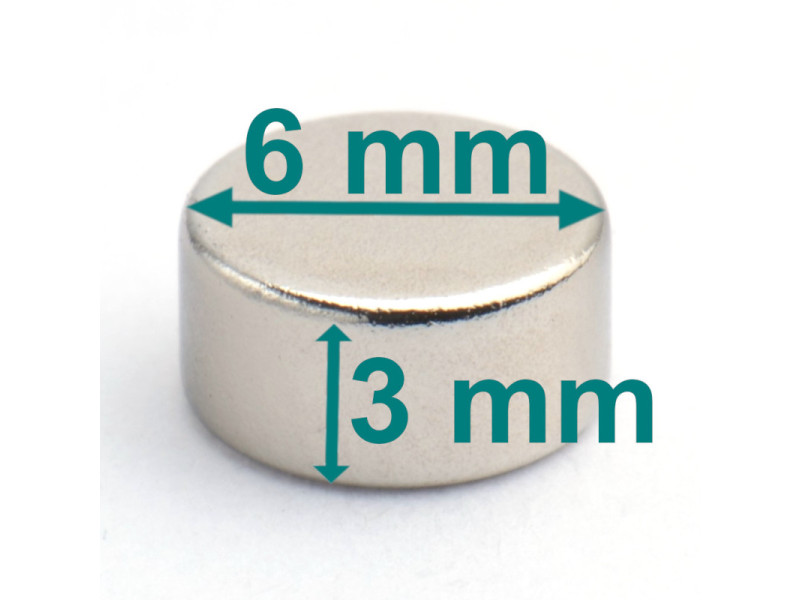
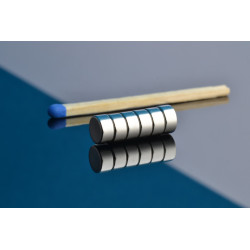
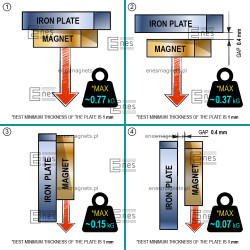
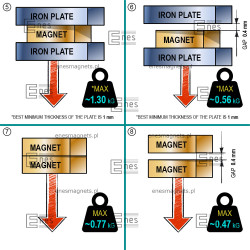
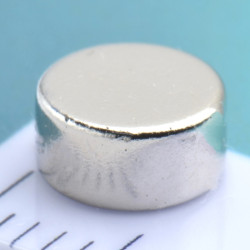
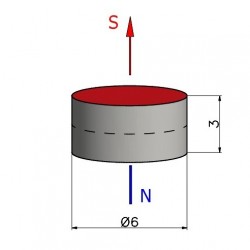
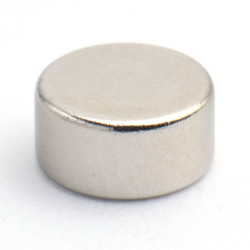
This disc magnet with a diameter of 6 mm and a height of 3 mm is a neodymium magnet. In the picture gallery, you can see a graphic showing the force with which the magnet can be detached depending on the direction of the force acting on the magnet and depending on the air gap. The best iron sheet should be at least 1 mm thick. If the sheet is thinner, the neodymium magnet field will saturate the entire thickness of the sheet, but unfortunately some of the magnetic field from the magnet will be unproductively located behind the sheet, and therefore the magnet will have a lower lifting capacity in practice.