remanence Br |
~ 1,197 [T] |
coercivity HcB |
~ 842 [kA/m] |
coercivity HcJ |
~ 935 [kA/m] |
We can offer magnet parameters according to individual specifications, including for remanence induction Br, coercivity HcB, coercivity HcJ, magnetic moment, operating point Jd, magnetisation direction and its deviation, etc. In your e-mail correspondence, please indicate the required minimum parameter values or magnetic parameter values within the specified minimum-maximum range.
Density |
~7,5 [g/cm3] |
Vickers’ hardness (HV) |
~600 [kg/mm2] |
Resistivity |
~144 [uOhm x cm] |
If you require neodymium magnets manufactured to strict specifications, please send us your enquiry along with your requirements.
.jpg)
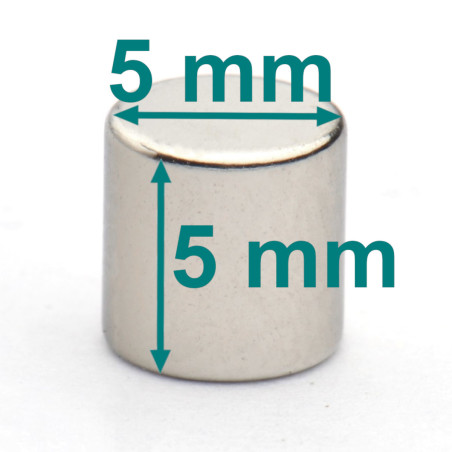
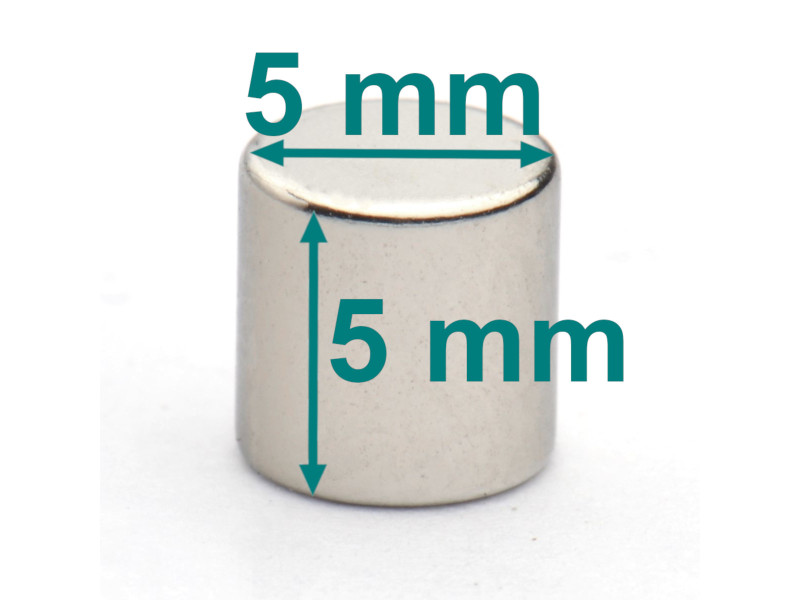
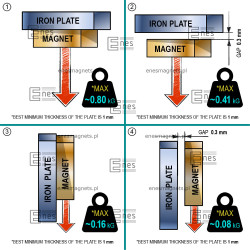
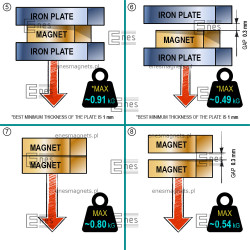
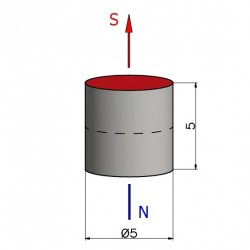
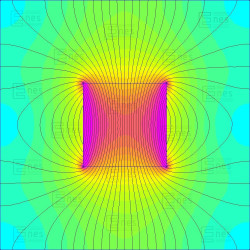
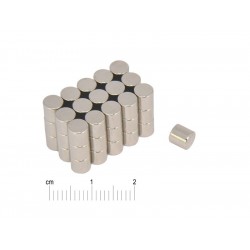
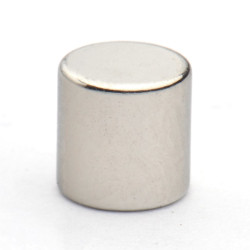
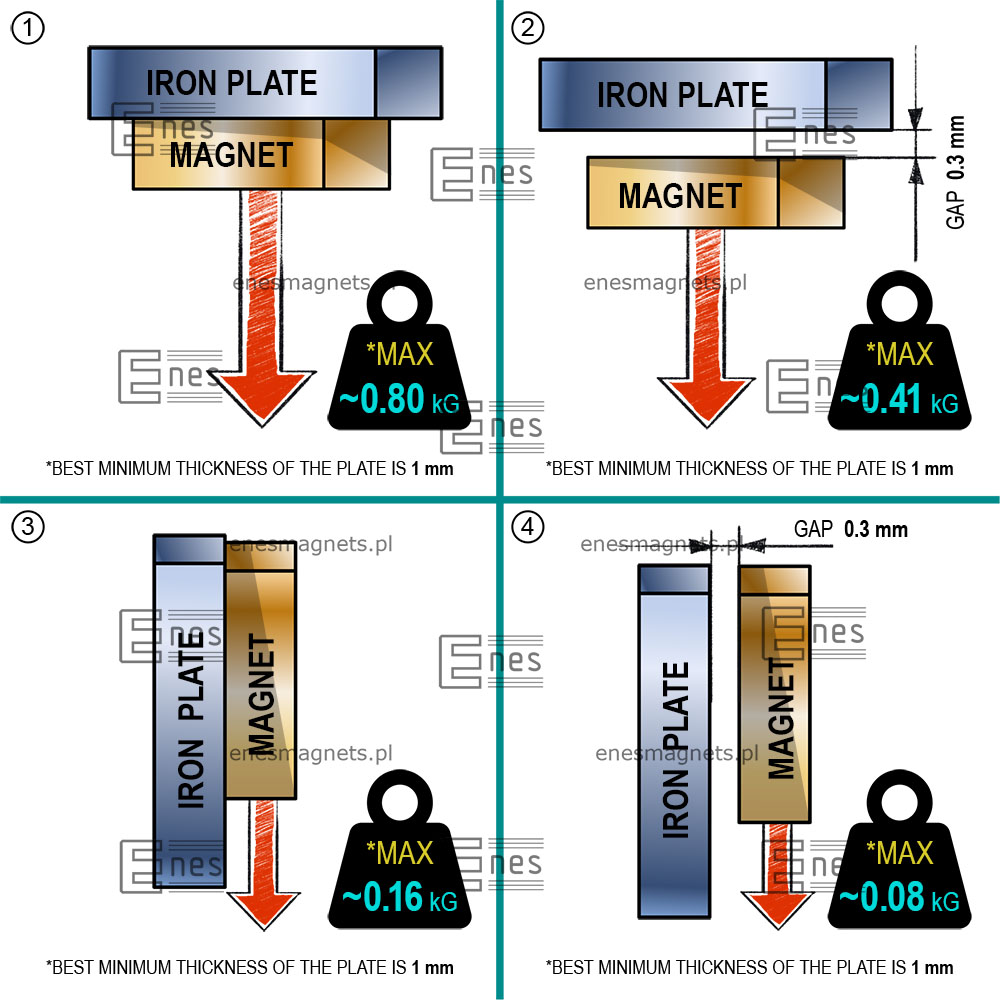
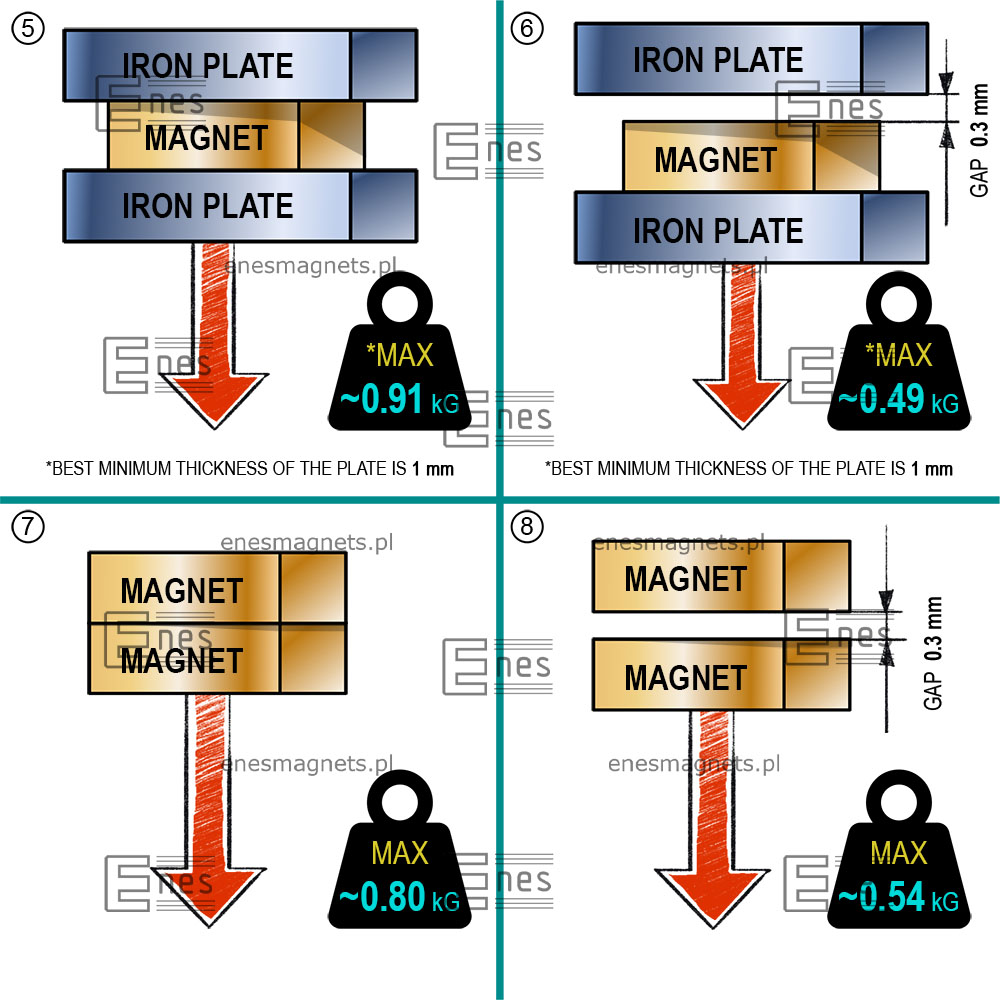
A cylindrical neodymium magnet with a height of 5 mm and a diameter of 5 mm is a very well-designed magnet. Increasing the height of this magnet will only slightly increase the lifting capacity, but the price of the magnet will increase significantly. If this neodymium magnet is to come into direct contact with another magnet or iron plate, there is no need to increase its height. If there is a significant gap between the magnets or between the magnet and the plate, it is better to use a tall magnet because it will work with its magnetic field over a greater distance than a short magnet.